
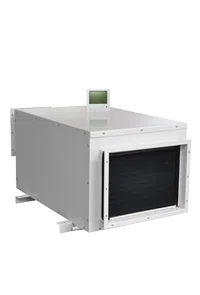
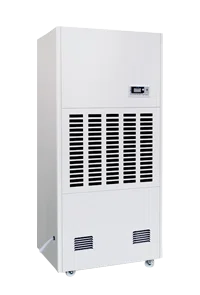
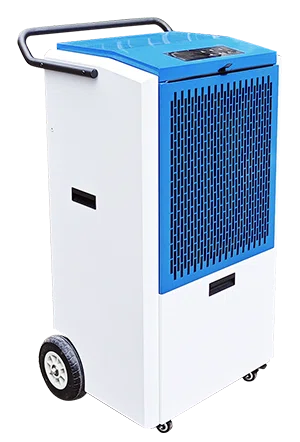
Wet Film Humidifiers in Textile and Printing Industries
Humidity control is a critical yet often underestimated factor in textile and printing production. From fiber processing and fabric finishing to high-precision printing, maintaining stable relative humidity directly affects product quality, operational efficiency, and equipment reliability. Among various industrial humidification solutions, wet film humidifiers have become a preferred choice for textile and printing industries due to their energy efficiency, natural evaporation process, and stable humidification performance.
Why Humidity Control Matters in Textile and Printing Plants
Both textile and printing processes are highly sensitive to moisture levels in the air:
- Textile industry: Insufficient humidity increases static electricity, causes yarn breakage, fiber fly, fabric shrinkage, and uneven tension during weaving and knitting.
- Printing industry: Low humidity leads to paper curling, misregistration, ink drying issues, and electrostatic attraction of dust, while excessive humidity can affect ink adhesion and drying time.
Maintaining optimal relative humidity—typically between 55% and 65% RH, depending on the process—is essential for consistent production quality.
What Is a Wet Film Humidifier?
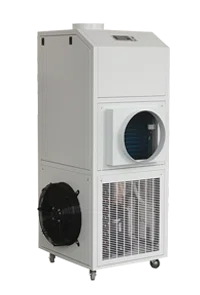
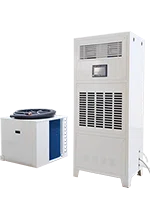
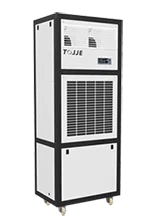
A wet film humidifier (also known as an evaporative or film-type humidifier) uses a porous, water-absorbing medium to create a large evaporation surface. Water flows evenly over the wet film, and air passing through the medium absorbs moisture naturally through evaporation.
Key characteristics include:
- No high-pressure spray or steam generation
- No visible mist or water droplets
- Humidity output closely follows the air’s absorption capacity
This makes wet film humidifiers particularly suitable for large, continuous industrial environments.
Advantages of Wet Film Humidifiers for Textile and Printing Applications
1. Energy Efficiency
Wet film humidifiers rely on natural evaporation rather than heating water to generate steam. This significantly reduces energy consumption, making them ideal for factories aiming to lower operating costs and carbon emissions.
2. Stable and Uniform Humidification
Unlike spray-based systems, wet film humidifiers provide smooth, gradual moisture release. This helps maintain uniform humidity across large production halls, reducing fluctuations that can impact fabric tension or print registration.
3. Reduced Static Electricity
In textile spinning, weaving, and printing lines, proper humidity minimizes static buildup. This leads to fewer yarn breaks, cleaner paper handling, and improved machine performance.
4. Low Risk of Over-Humidification
Because evaporation depends on air conditions, wet film systems are less likely to cause condensation or excessive humidity, protecting machinery, materials, and building structures.
5. Environmentally Friendly Operation
With low water waste and no need for chemical additives or boilers, wet film humidifiers support sustainable manufacturing practices—an increasingly important factor for textile and printing brands.
Typical Applications in Textile and Printing Industries
- Spinning and weaving workshops
- Knitting and nonwoven production lines
- Fabric finishing and coating areas
- Offset, gravure, and digital printing rooms
- Paper storage and pre-press environments
- Warehouse and raw material storage areas
In each of these zones, consistent humidity improves process stability and reduces defect rates.
Installation and Maintenance Considerations
To ensure optimal performance, several factors should be considered:
- Water quality: Clean or treated water helps extend the life of the wet film media and prevents scale buildup.
- Airflow design: Proper air distribution ensures even humidification across the workspace.
- Regular maintenance: Periodic cleaning or replacement of the wet film media maintains efficiency and hygiene.
- Seasonal adjustments: Humidity setpoints may need adjustment based on climate and production changes.
Compared with steam humidifiers, maintenance is generally simpler and more cost-effective.
As textile and printing industries continue to pursue higher quality, greater efficiency, and more sustainable operations, wet film humidifiers offer a reliable and energy-efficient solution for humidity control. By improving material handling, reducing static electricity, and stabilizing production environments, they play a vital role in modern manufacturing facilities.