
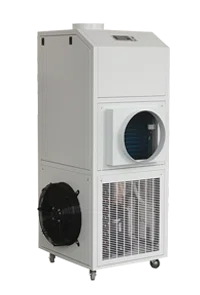
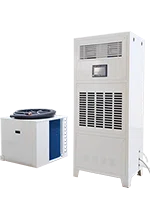
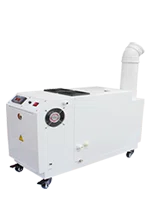
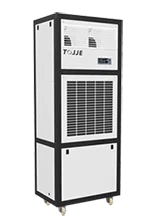
Waste Heat Recovery Integration in Industrial Dehumidifiers
Industrial facilities such as glass tempering lines, injection molding workshops, mines, and ports generate significant amounts of low- to medium-grade waste heat. Traditionally, this thermal energy is vented into the atmosphere through cooling towers, air-cooled condensers, and exhaust ducts, representing a substantial efficiency loss. By integrating Waste Heat Recovery (WHR) into industrial dehumidifiers, manufacturers and plant operators can simultaneously control humidity and reclaim valuable energy, reducing operational costs and carbon emissions.
Core Integration Architectures
There are three proven WHR integration pathways:
1. Condenser Heat Recovery (CHR) Loop
- Captures compressor discharge heat using plate or fin-tube heat exchangers
- Redirects thermal energy into regeneration air or auxiliary air heating
- Best suited for refrigeration industrial dehumidifiers in production workshops
- Typical benefit: 10–20% electrical energy reduction
2. External Waste Heat Regeneration (E-WHR)
- Uses facility waste heat via air-to-air or air-to-water heat exchangers
- Waste heat replaces or supplements electric/steam desiccant regeneration
- Compatible with desiccant rotor industrial dehumidifiers
- Typical benefit: 20–35% regeneration energy reduction
3. Hybrid WHR + Heat Pump Assisted Dehumidification
- WHR handles base regeneration load, while a heat pump boosts remaining demand
- Enables ultra-efficient moisture removal in cold or fluctuating environments
- Typical benefit: 30%+ overall energy savings
- Lowest lifecycle cost but highest system complexity
Design Considerations & Reliability
When implementing WHR, industrial operators should evaluate:
- Heat availability profile
- Dew-point target and required regeneration energy
- Corrosion resistance for coastal or mine air streams
- Fouling and dust tolerance, especially for mines and ports
- Bypass and fail-safe logic to ensure humidity control even when waste heat fluctuates
A well-engineered WHR module must not compromise uptime. In harsh environments, heat exchangers should support salt-fog resistance (ISO 9227) and include filtration stages or self-cleaning options.
Future Directions
The next frontier for WHR-enabled industrial dehumidifiers includes:
- AI-optimized heat allocation between humidity control and space heating
- Dynamic WHR bypass using edge computing
- Low-SWaP WHR modules for mobile LED dehumidifier vans or portable industrial units (an area you’ve explored before)
WHR integration is no longer an optional feature—it is becoming a core efficiency strategy for industrial moisture control. With the right architecture, operators can transform industrial dehumidifiers from pure energy consumers into energy-recycling assets, achieving reliable humidity control while maximizing facility thermal efficiency.