
Ultrasonic Industrial Humidifiers in Semiconductor Manufacturing
Semiconductor manufacturing requires extremely precise environmental control to maintain product quality, operational stability, and production efficiency. Among the critical environmental factors, humidity control plays a major role in preventing electrostatic discharge (ESD), maintaining cleanroom conditions, and protecting sensitive electronic components.
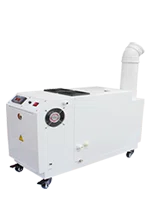
Ultrasonic industrial humidifiers have become an essential solution in semiconductor production facilities because they provide highly accurate humidity control, low energy consumption, and clean mist generation. These advanced humidification systems help semiconductor manufacturers maintain stable production environments while supporting the strict standards required in modern electronics manufacturing.
Importance of Humidity Control in Semiconductor Manufacturing
Semiconductor fabrication involves highly sensitive processes such as wafer production, photolithography, etching, packaging, and testing. Even small environmental fluctuations can affect product quality and manufacturing yield.
Improper humidity levels may lead to:
-
Electrostatic discharge (ESD) damage
-
Dust and particle contamination
-
Wafer defects
-
Equipment instability
-
Reduced production efficiency
-
Product reliability issues
Maintaining stable humidity is therefore essential in semiconductor cleanroom operations.
Why Semiconductor Facilities Use Ultrasonic Humidifiers
Precise Humidity Control
Semiconductor production environments require strict humidity regulation, often within narrow tolerance ranges.
Ultrasonic humidifiers provide:
-
Fast humidity response
-
Accurate moisture control
-
Stable environmental conditions
-
Uniform mist distribution
This helps maintain consistent cleanroom performance.
Prevention of Electrostatic Discharge (ESD)
Low humidity levels increase static electricity generation, which can damage sensitive semiconductor components and wafers.
Proper humidity control helps:
-
Reduce static buildup
-
Protect microelectronic devices
-
Improve manufacturing safety
-
Minimize product defects
Ultrasonic humidifiers are widely used to maintain ideal humidity levels that reduce ESD risks.
Cleanroom Compatibility
Semiconductor manufacturing occurs in highly controlled cleanroom environments.
Ultrasonic humidifiers support cleanroom requirements because they:
-
Produce ultra-fine mist particles
-
Operate quietly
-
Minimize heat generation
-
Support contamination-controlled environments
When combined with purified water systems, they help maintain high air cleanliness standards.
Energy Efficiency
Compared with steam humidification systems, ultrasonic humidifiers consume significantly less energy.
Benefits include:
-
Lower operational costs
-
Reduced heat load on HVAC systems
-
Improved sustainability
-
Better energy management
Energy efficiency is increasingly important in large semiconductor production facilities.
Applications in Semiconductor Manufacturing
Wafer Fabrication Facilities
During wafer processing, stable humidity helps maintain process consistency and prevent contamination.
Ultrasonic humidifiers are commonly used in:
-
Photolithography rooms
-
Etching areas
-
Wafer handling systems
-
Inspection laboratories
Semiconductor Packaging Plants
Packaging operations require humidity control to protect sensitive chips and electronic assemblies.
Proper humidity levels help prevent:
-
Static damage
-
Material deformation
-
Bonding defects
-
Surface contamination
Cleanroom Air Management
Cleanroom HVAC systems often integrate ultrasonic humidifiers to maintain optimal air conditions.
This supports:
-
Stable airflow environments
-
Controlled particle movement
-
Temperature and humidity balance
Electronics Testing Laboratories
Semiconductor testing and calibration environments require stable humidity conditions for accurate measurement and reliable equipment operation.
Advantages of Ultrasonic Humidifiers in Semiconductor Facilities
Fine Mist Generation
Ultrasonic technology creates microscopic water droplets that evaporate quickly and distribute evenly throughout cleanroom spaces.
Low Heat Output
Unlike steam humidifiers, ultrasonic systems do not significantly increase room temperature.
This helps maintain thermal stability in precision manufacturing environments.
Quiet Operation
Low-noise performance is beneficial for laboratory and cleanroom working environments.
Rapid Humidity Adjustment
Ultrasonic systems respond quickly to humidity fluctuations, supporting continuous environmental stability.
Reduced Maintenance Costs
Modern ultrasonic humidifiers often feature:
-
Automated controls
-
Water filtration systems
-
Self-protection functions
-
Long-life transducers
These features help reduce maintenance frequency and operational downtime.
Water Quality Requirements
Water quality is critical in semiconductor humidification systems.
Most facilities use:
-
Deionized (DI) water
-
Reverse osmosis (RO) purified water
-
Ultrapure water systems
High-purity water helps prevent:
-
Mineral residue
-
Airborne contamination
-
White dust generation
-
Equipment scaling
Smart Technology and Automation
Modern semiconductor facilities increasingly use smart ultrasonic humidification systems integrated with automation platforms.
Advanced features include:
-
IoT-based monitoring
-
Remote humidity control
-
AI-powered environmental analysis
-
Real-time sensor feedback
-
Predictive maintenance systems
These technologies improve operational efficiency and environmental precision.
Environmental and Sustainability Benefits
Ultrasonic humidifiers support sustainability goals through:
-
Lower energy consumption
-
Reduced water usage
-
Minimal heat waste
-
Improved HVAC efficiency
-
Reduced carbon emissions
These advantages help semiconductor manufacturers achieve greener production operations.
Ultrasonic industrial humidifiers play a vital role in semiconductor manufacturing by providing precise humidity control, preventing electrostatic discharge, and supporting cleanroom stability. Their energy efficiency, fine mist technology, and compatibility with advanced manufacturing systems make them ideal for modern semiconductor facilities.