
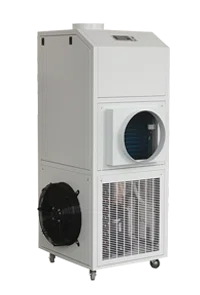
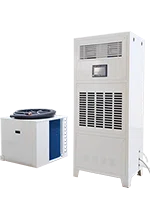
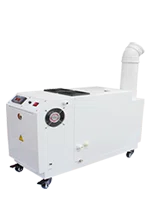
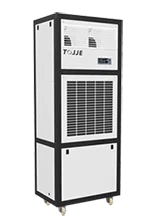
Rotary Dehumidifiers for Powdered Food Production
Powdered food products such as milk powder, protein powder, flour-based ingredients, instant beverage mixes, seasoning powders, and nutritional supplements can be highly sensitive to moisture.
Excess humidity can affect powder flowability, increase the risk of clumping, influence storage stability, and create challenges during filling and packaging. For manufacturers, maintaining a stable and appropriately dry production environment is therefore an important part of process control.
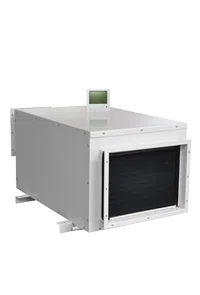
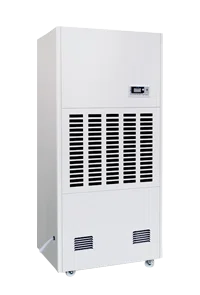
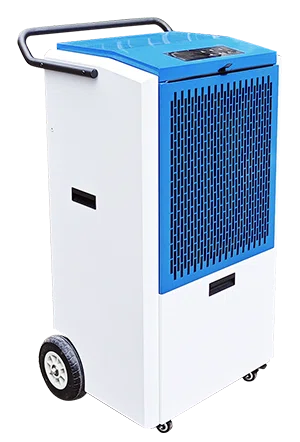
Rotary dehumidifiers use desiccant-based moisture removal technology to continuously reduce humidity in industrial environments. By providing controlled low-humidity air, these systems can support powdered food production, packaging, storage, and other moisture-sensitive processes.
Reducing Moisture-Related Clumping
Powdered food products may form lumps when exposed to excessive moisture.
This can affect both product appearance and downstream processing.
For example, powders used in:
-
Instant drinks
-
Dairy products
-
Nutritional products
-
Seasonings
-
Baking ingredients
may require controlled environmental conditions to maintain their desired physical characteristics.
A stable low-humidity environment can help reduce the opportunity for airborne moisture to interact with hygroscopic powders.
Rotary Dehumidifiers for Food Processing Areas
Humidity control can be applied to multiple stages of powdered food manufacturing.
Potential applications include:
Powder Blending
Controlled humidity can help maintain consistent powder handling during mixing and blending.
Powder Filling
Dry air can help reduce moisture-related flow problems during automated filling operations.
Packaging
Humidity control can help reduce moisture exposure before and during packaging.
Material Handling
Low-humidity conditions can support more stable transportation of moisture-sensitive powders between processing stages.
Supporting Packaging Quality
Packaging is a critical stage for powdered food products.
If a powder absorbs moisture before or during packaging, it may become more difficult to fill accurately or maintain the intended product characteristics.
Humidity-controlled packaging areas can help:
-
Improve powder handling
-
Reduce clumping
-
Support consistent filling
-
Reduce moisture exposure
-
Improve packaging process stability
The appropriate humidity level depends on the specific product, packaging material, and manufacturing process.
Protecting Moisture-Sensitive Ingredients
Different powdered food ingredients have different moisture sensitivities.
Examples may include:
-
Milk powder
-
Protein powder
-
Instant coffee
-
Powdered beverages
-
Seasoning blends
-
Nutritional powders
-
Certain pharmaceutical-food ingredients
For these products, humidity control should be considered together with product formulation, temperature, packaging, storage conditions, and sanitation requirements.
Why Use Rotary Dehumidifiers Instead of Conventional Systems?
Conventional refrigerant dehumidifiers can be effective for general humidity control, particularly under moderate temperature and humidity conditions.
However, desiccant-based rotary dehumidification can be advantageous when a production environment requires lower humidity levels or continuous moisture removal.
Potential benefits include:
-
Continuous operation
-
Stable moisture removal
-
Low-dew-point air capability
-
Suitability for moisture-sensitive processes
-
Flexible integration with HVAC systems
-
Precise humidity management
The appropriate technology should be selected based on the required dew point, airflow, temperature, humidity load, and production conditions.
Energy Efficiency Considerations
Although rotary dehumidifiers use energy for desiccant regeneration, system efficiency can be improved through appropriate design.
Potential approaches include:
-
Heat recovery
-
Efficient regeneration heating
-
Optimized airflow
-
Variable-speed fans
-
Proper system sizing
-
Integration with existing HVAC equipment
-
Monitoring of process conditions
Correctly sizing the dehumidifier is particularly important. An oversized system may increase energy consumption, while an undersized system may struggle to maintain the required humidity level.
Integrating Rotary Dehumidifiers into Food Production Facilities
A rotary dehumidification system can be integrated with the facility's existing air-handling infrastructure.
A typical system may include:
Air Intake → Filtration → Dehumidification → Temperature Control → Production Area
Sensors can monitor:
-
Relative humidity
-
Dew point
-
Temperature
-
Airflow
-
Equipment operating status
Automated controls can then adjust the system according to actual environmental conditions.
Humidity Control in Powdered Food Storage
Humidity management should not necessarily stop after production.
Powdered food products may continue to absorb moisture during storage if environmental conditions are not properly controlled.
Rotary dehumidifiers can be used in suitable storage environments to help maintain stable humidity around moisture-sensitive products.
However, environmental control should work together with:
-
Appropriate packaging
-
Sealed containers
-
Proper warehouse practices
-
Temperature control
-
Product-specific storage requirements
Supporting Consistent Production Quality
Stable environmental conditions can contribute to more consistent manufacturing.
By controlling humidity, manufacturers can potentially improve consistency in:
-
Powder flow
-
Material feeding
-
Filling
-
Mixing
-
Packaging
-
Storage
This is particularly valuable for automated production lines where variations in powder behavior can affect machine performance and product throughput.
Rotary dehumidifiers provide an effective solution for controlling moisture in powdered food production environments. By continuously removing moisture from process air, desiccant-based systems can help maintain stable humidity conditions for powder processing, filling, packaging, and storage.
Effective humidity control can help reduce moisture-related problems such as clumping and inconsistent powder flow, while supporting more stable production conditions.
For manufacturers evaluating a rotary dehumidification system, important factors include the required dew point, airflow, moisture load, temperature, hygiene requirements, energy efficiency, and control strategy.
When properly designed and integrated with other environmental-control measures, rotary dehumidifiers can play an important role in reliable and efficient powdered food manufacturing.