
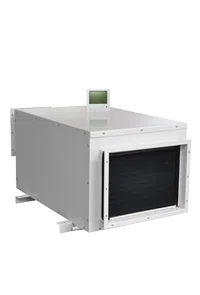
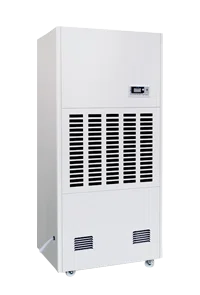
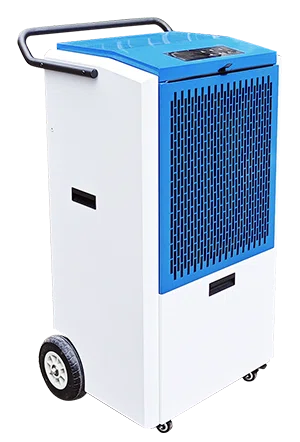
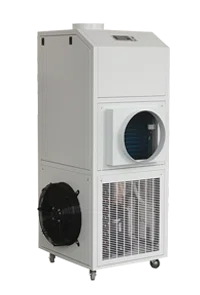
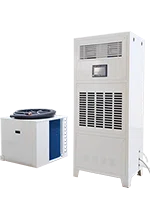
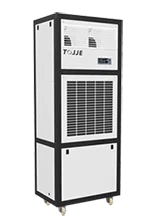
Integrating Industrial Dehumidifiers with Building Management Systems
Integrating industrial dehumidifiers with a BMS enables centralized control, real-time monitoring, and data-driven decision-making—transforming humidity control from a standalone function into a core part of intelligent facility management.
Why Integrate Industrial Dehumidifiers with BMS?
Industrial environments such as manufacturing plants, warehouses, data centers, and cleanrooms are highly sensitive to humidity fluctuations. Traditional standalone dehumidifiers often operate in isolation, leading to inefficiencies and limited visibility.
By integrating dehumidifiers into a BMS, facility managers can:
- Gain centralized visibility over humidity levels across zones
- Improve energy efficiency through coordinated system control
- Enable predictive maintenance and fault detection
- Ensure process stability and product quality
Key Benefits of BMS-Integrated Dehumidification
1. Centralized Monitoring and Control
When connected to a BMS, industrial dehumidifiers can be monitored alongside HVAC, ventilation, and energy systems. Operators can view real-time humidity data, system status, and alarms from a single interface, reducing manual intervention and response time.
2. Energy Optimization
Humidity control is closely linked to temperature and airflow. A BMS can intelligently coordinate dehumidifiers with HVAC systems to:
- Avoid redundant operation
- Reduce peak energy demand
- Optimize setpoints based on occupancy or production schedules
This coordinated approach can significantly lower overall energy consumption.
3. Automated and Adaptive Operation
Integrated systems allow dehumidifiers to respond automatically to environmental changes. For example, humidity setpoints can be adjusted based on:
- Time of day or season
- Production processes
- Weather data or outdoor air conditions
This adaptive control improves both efficiency and reliability.
4. Predictive Maintenance and Reduced Downtime
BMS integration enables continuous performance tracking of industrial dehumidifiers. Abnormal trends—such as reduced moisture removal efficiency or excessive runtime—can trigger early warnings, allowing maintenance teams to act before failures occur.
Communication Protocols and Integration Methods
Industrial dehumidifiers can be integrated with BMS platforms using common industrial communication protocols, including:
- Modbus RTU / Modbus TCP
- BACnet (MS/TP or IP)
- KNX or LonWorks (in some facilities)
Through these protocols, key parameters such as humidity readings, operating status, alarms, and energy consumption can be shared seamlessly with the BMS.
Typical Application Scenarios
Manufacturing Plants
In electronics, automotive, battery, and precision manufacturing, BMS-integrated dehumidifiers help maintain tight humidity tolerances, directly supporting product quality and yield.
Warehouses and Logistics Centers
For storage facilities, centralized humidity management prevents condensation, corrosion, and mold growth while reducing operational costs across large spaces.
Pharmaceutical and Cleanroom Environments
Integration ensures compliance with strict environmental standards by maintaining consistent humidity levels and providing full data traceability for audits.
Data Centers and Infrastructure Facilities
Coordinated humidity control protects sensitive equipment from electrostatic discharge and condensation risks, improving long-term reliability.
Data-Driven Humidity Management
Once integrated into a BMS, dehumidification data becomes a valuable asset. Historical humidity trends, runtime data, and energy usage can be analyzed to:
- Optimize system design and capacity planning
- Identify inefficient operating patterns
- Support sustainability and carbon reduction initiatives
This data-driven approach aligns humidity control with broader smart building and Industry 4.0 strategies.
Integrating industrial dehumidifiers with Building Management Systems is no longer a luxury—it is a strategic necessity for modern industrial facilities. By enabling centralized control, intelligent automation, and actionable insights, BMS-integrated dehumidification enhances energy efficiency, protects assets, and supports stable, high-quality production.