
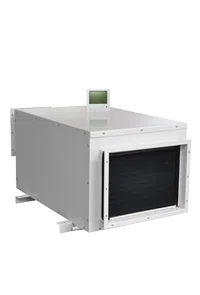
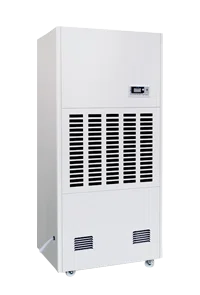
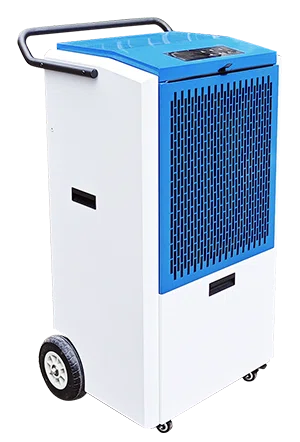
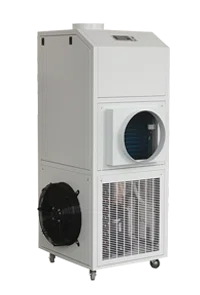
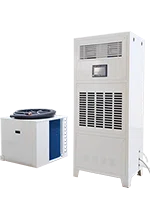
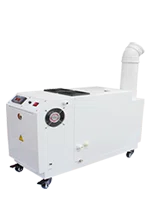
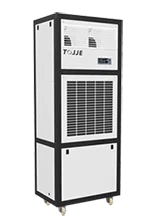
Explosion-Proof Rotary Dehumidifiers for Hazardous Areas
In hazardous industrial environments, effective humidity control is not only a matter of product quality and process stability—it is also a critical safety requirement. Industries such as oil & gas, chemical processing, pharmaceuticals, mining, and battery manufacturing often operate in areas where flammable gases, vapors, or combustible dust are present. In these conditions, standard dehumidification equipment may pose ignition risks.
Why Rotary (Desiccant) Dehumidifiers Are Ideal for Hazardous Areas
Unlike refrigerant dehumidifiers, rotary dehumidifiers use a desiccant wheel to adsorb moisture directly from the air. This offers several advantages in explosive environments:
- No condensation coils, reducing the risk of corrosion and leakage
- Stable performance at low temperatures and low humidity levels
- Capability to achieve very low dew points
- Continuous operation, ideal for 24/7 industrial processes
These characteristics make rotary dehumidifiers particularly suitable for demanding and safety-critical applications.
Typical Hazardous Area Applications
1. Oil & Gas Facilities
Explosion-proof rotary dehumidifiers are widely used in offshore platforms, refineries, and gas processing plants to control moisture in control rooms, electrical enclosures, and equipment shelters, reducing corrosion and insulation failure.
2. Chemical & Petrochemical Plants
In environments with volatile solvents or reactive chemicals, maintaining controlled humidity helps prevent condensation, material degradation, and unintended chemical reactions.
3. Lithium Battery & Energy Storage Manufacturing
Dry rooms used in battery electrode production require ultra-low humidity and strict explosion protection due to flammable electrolytes and solvents.
4. Pharmaceutical & Fine Chemical Production
Explosion-proof dehumidifiers support safe processing where alcohols, powders, or solvent vapors are present, while also ensuring compliance with GMP requirements.
5. Mining & Dust Hazard Areas
In coal handling, metal powder processing, and bulk material storage, explosion-proof designs help mitigate dust ignition risks while protecting equipment from moisture damage.
Compliance and Certification Standards
When selecting an explosion-proof rotary dehumidifier, compliance with relevant regulations is essential:
- ATEX Directive (EU) – Equipment for explosive atmospheres
- IECEx System – International certification for hazardous locations
- NEC / NFPA (North America) – Class, Division, and Zone standards
- IP & corrosion resistance ratings for harsh environments
Proper certification ensures both legal compliance and operational safety.
Design and Selection Considerations
To ensure optimal performance and safety, engineers should evaluate:
- Required dew point and airflow capacity
- Hazardous area classification
- Available regeneration heat source
- Integration with HVAC or process air systems
- Maintenance accessibility and lifecycle costs
Custom-engineered solutions are often preferred for complex or high-risk environments.
Explosion-proof rotary dehumidifiers play a vital role in maintaining safe, stable, and efficient operations in hazardous areas. By combining desiccant-based dehumidification with certified explosion-proof design, these systems protect both people and assets while enabling precise humidity control under extreme conditions.