
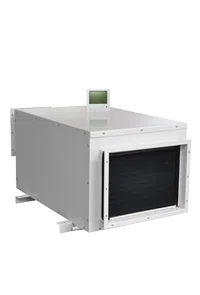
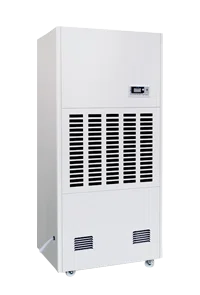
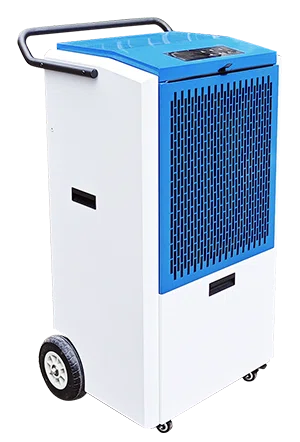
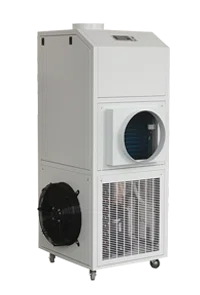
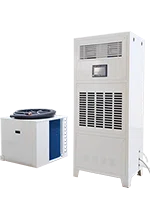
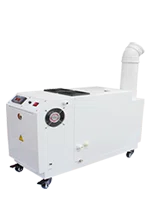
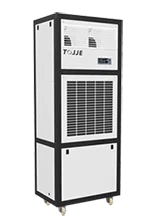
Attemperation Dehumidifier for Ports, Mines, and Outdoor Facilities
Ports, mines, and outdoor industrial facilities operate in environments defined by extremes—high humidity, salt-laden air, abrasive dust, temperature swings, and limited installation space. Conventional dehumidifiers can remove moisture, but they often fail to maintain thermal balance, leading to overcooling, coil freeze-ups, corrosion, or unstable dew point control.
An Attemperation Dehumidifier solves this by integrating temperature regulation with active dehumidification, enabling moisture removal without driving air temperatures into frost-forming or mechanically stressful regimes. This dual control is no longer a luxury—it's a requirement for infrastructure that cannot afford downtime.
How Attemperation Dehumidifiers Deliver Reliability
1. Moisture Removal Without Frost Formation
By applying controlled reheat or thermal tempering after the dehumidification coil, the system maintains air temperature above frost thresholds while still achieving target RH or dew point. This prevents:
- Ice buildup on coils and vents
- Blocked condensate drains
- Start-stop cycling that accelerates wear
2. Contamination-Tolerant Airflow Engineering
Attemperation dehumidifiers designed for field extremes integrate:
- Pre-filtration stages for dust and micro-particles
- Positive-pressure coil routing to reduce particulate anchoring
- Vibration-tolerant duct and mount design
This is especially valuable in mines where dust load is constant and mechanical shock is unavoidable.
3. Corrosion-Resistant Material Stack
For ports and coastal outdoor facilities, a durable build must include environmental-grade materials. Proven solutions include:
- Electroless NiP-plated coils or housings for uniform corrosion resistance
- Ceramic or Al₂O₃ protective overcoats on exposed metal surfaces
- Stainless steel or coated aluminum frames for salt and oxidation resilience
- Sealed electrical and sensor compartments to prevent moisture ingress
Deployment Strategies for Maximum Stability
Ceiling-Mounted & Confined Installations
Many port control rooms and mine metrology cabins lack floor space. Effective integrations include:
- Ceiling-mounted attemperation units with balanced drain gradients
- Overhead vibration isolators to protect linkages and coil mounts
- Optimized purge gas or desiccated air feed in sensor rooms
Remote & Mobile Installations
Outdoor facilities often involve:
- Containerized pump rooms
- Remote sensing shelters
- Truck or trailer-mounted field labs
Low-SWaP (Size, Weight, Power) attemperation dehumidifiers excel here due to:
- Hybrid refrigeration + reheat efficiency
- Reduced start-energy spikes
- Stable RH control in fluctuating climates
Maintenance & Failure Prevention Checklist
Ports
- Inspect salt film buildup on coil fins
- Verify anti-frost vent routing
- Ensure drain lines are gradient-correct and flushed
Mines
- Replace or clean pre-filters frequently
- Check linkage wear under vibration
- Inspect vacuum equalization in bowl and duct routing
Outdoor Facilities
- Test reheat loop efficiency seasonally
- Confirm seals haven’t hardened below glass transition
- Validate sensor calibration post thermal cycling
For ports, mines, and outdoor facilities, this means higher uptime, lower maintenance cost, longer service life, and stable sensing environments—without relying on delicate electronics or frequent replacement cycles.